

If you’ve just been told you have a hernia, the diagnosis is rarely the hard part. The harder question is usually: do I wait for a slot at a public hospital, or go private and have this addressed sooner?
There’s no single right answer. It depends on your specific hernia and your own circumstances. This article lays out what the data and clinical guidance actually say about each pathway, so you can make that decision with accurate information rather than guesswork.
Quick answer: Referred through a polyclinic, the median wait for a first specialist appointment at a public hospital is around 24 days for less-urgent referrals, though some surgical specialties run one to two months, and that’s before a surgery date is even scheduled (Ministry of Health, 2013). Going private, most patients can see a specialist within a day or two and have surgery arranged within one to two weeks. Which timeline matters more to you depends on how your hernia is behaving.
What a Hernia Is, and Why the “Should I Wait” Question Is the Wrong One
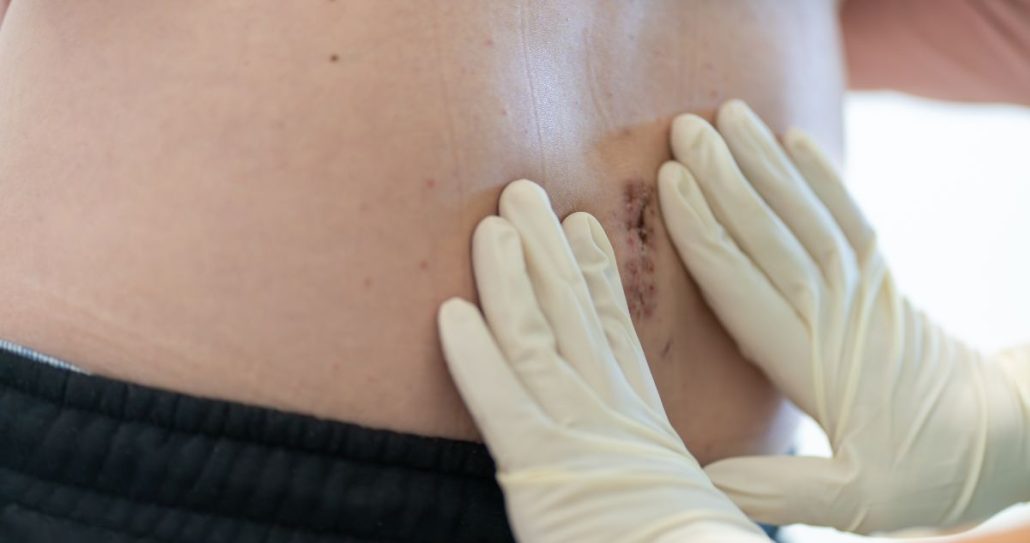
A hernia occurs when internal tissue pushes through a weak point in the surrounding muscle wall, most often in the groin (inguinal hernia), near the navel (umbilical hernia), or at a previous surgical scar (incisional hernia).
Two facts matter more than any waiting-time comparison:
- Hernias do not resolve on their own. Surgery is the only way to definitively repair one.
- Not every hernia needs to be fixed immediately. Some can be safely monitored for a period. Others cannot.
So the real question isn’t “public or private” in the abstract. It’s “how urgent is my hernia,” because that determines how much either timeline actually matters to you.
Emergency, regardless of which route you’d otherwise pick: a hernia that becomes firm, very painful, discoloured, and cannot be pushed back in may be strangulated. The blood supply to the trapped tissue is cut off. Associated symptoms include severe constant pain, nausea, vomiting, and fever. This requires same-day A&E attention.
Lower urgency: a small hernia that’s painless or mildly uncomfortable and reduces easily (goes back in when pressed or lying down) can often be reasonably monitored.
Higher urgency: a hernia that’s growing, increasingly painful, or harder to push back in warrants a prompt surgical assessment.
Hernia Surgery: The Public (Restructured Hospital) Route
The typical pathway: polyclinic or GP visit → referral to a restructured hospital’s general surgery specialist outpatient clinic (SOC) → consultation → separate wait for a surgery slot.
| Stage | What happens | Typical timeframe |
| Polyclinic/GP to SOC referral | GP assesses and refers if surgery is indicated | Median ~24 days for less-urgent referrals; some surgical specialties run 1–2 months (MOH) |
| Specialist consult | Diagnosis confirmed, imaging if needed, options discussed | Single visit, once the appointment is reached |
| Surgery slot | Elective surgery is queued separately from the consult | Additional weeks to months, depending on the hospital’s operating theatre capacity at the time |
Urgent referrals (e.g., suspected complications) are fast-tracked and seen far sooner than the median above. The wait times here describe non-urgent, elective cases.
What this route offers: significant government subsidy for Singapore Citizens and PRs, and access to a multidisciplinary hospital setting for higher-risk or complex cases.
What it costs in time: for a straightforward hernia simply waiting its turn, the combined wait (referral, consult, then a surgery slot), can reasonably run to two to three months or longer from the first GP visit.
Hernia Surgery: The Private Route
Private clinics accept self-referrals — no polyclinic letter is required.
| Stage | What happens | Typical timeframe |
| Consultation | Self-referred, booked directly | Often within 1–2 days |
| Diagnosis confirmation | Ultrasound/CT arranged if needed | Usually within the same week |
| Surgery scheduling | Surgeon books their own operating slot | Typically a few days to 2 weeks after the decision to proceed |
What this route offers: shorter and more predictable timelines, and continuity with a single surgeon from consult through to follow-up.
What it costs: private surgery is not government-subsidised, so out-of-pocket cost is generally higher. It can be partly offset using Medisave with withdrawal limits that vary by hernia type and complexity, and Integrated Shield Plans or corporate insurance may cover part of the bill depending on your policy. It’s worth checking your specific MediSave limit and insurance coverage with the clinic before deciding, since this changes the real cost gap between the two routes.
Hernia Surgery: Public vs Private, Side-by-Side
| Public (Restructured Hospital) | Private Clinic | |
|---|---|---|
| Referral needed | Yes — polyclinic/GP referral | No — self-referral |
| Time to first consult | ~24 days median (non-urgent); longer for some surgical specialties | Typically 1–2 days |
| Time to surgery after decision to proceed | Additional weeks to months, queue-dependent | Typically days to 2 weeks |
| Cost | Lower, with government subsidy for Citizens/PRs | Higher; partly offset by Medisave/insurance depending on plan |
| Surgeon continuity | Can vary with hospital rostering | Typically the same surgeon throughout |
| Generally suits | Non-urgent hernias; subsidised cost is the priority | Symptomatic/worsening hernias, or where schedule certainty matters |
Both routes are legitimate choices. Which one fits depends on your hernia’s urgency and your own priorities around cost versus time, not a general preference for one system over the other.
Is It Actually Safe to Wait?
It depends on the hernia, not the calendar. A small, reducible, low-symptom hernia can often be safely observed for a period. But “waiting” should mean monitored waiting with a plan to reassess, not an open-ended queue with no check-in.
Seek same-day medical attention (A&E, not a scheduled queue) if you notice:
- Sudden increase in pain or size
- The bulge becoming firm, tender, or discoloured
- Nausea, vomiting, or inability to push the hernia back in
- Fever alongside any of the above
These can indicate strangulation, a surgical emergency
Private Hernia Surgeon in Singapore: Dr Ganesh Ramalingam

This article was reviewed with input from Dr Ganesh Ramalingam, Medical Director of G&L Surgical Clinic.
- MBBS, National University of Singapore (1997)
- Fellow, Royal College of Surgeons, Edinburgh (FRCS)
- Fellow, Academy of Medicine, Singapore (FAMS), General Surgery
- Adjunct Assistant Professor, Yong Loo Lin School of Medicine, NUS
- Practice areas: general, laparoscopic, and bariatric surgery, including hernia repair
- Career experience includes appointments in both restructured (public) hospitals and private practice
Dr Ganesh performs both open and laparoscopic hernia repairs at G&L Surgical Clinic and can advise on whether observation or surgery, and which pathway, is appropriate for a specific case. This information is provided for reference and does not constitute a recommendation of one pathway over the other; the right choice depends on individual clinical assessment.
Next Steps
If you have a hernia diagnosis and are unsure how urgent it is, a consultation can clarify that, independent of which pathway you eventually choose.
G&L Surgical Clinic offers consultations with Dr Ganesh Ramalingam to assess your hernia and discuss your options.
Location: 38 Irrawaddy Road, #05-23, Mount Elizabeth Novena Hospital, Singapore 329563
WhatsApp: +65 9088 8313


