What Is The Treatment For Colorectal Cancer?
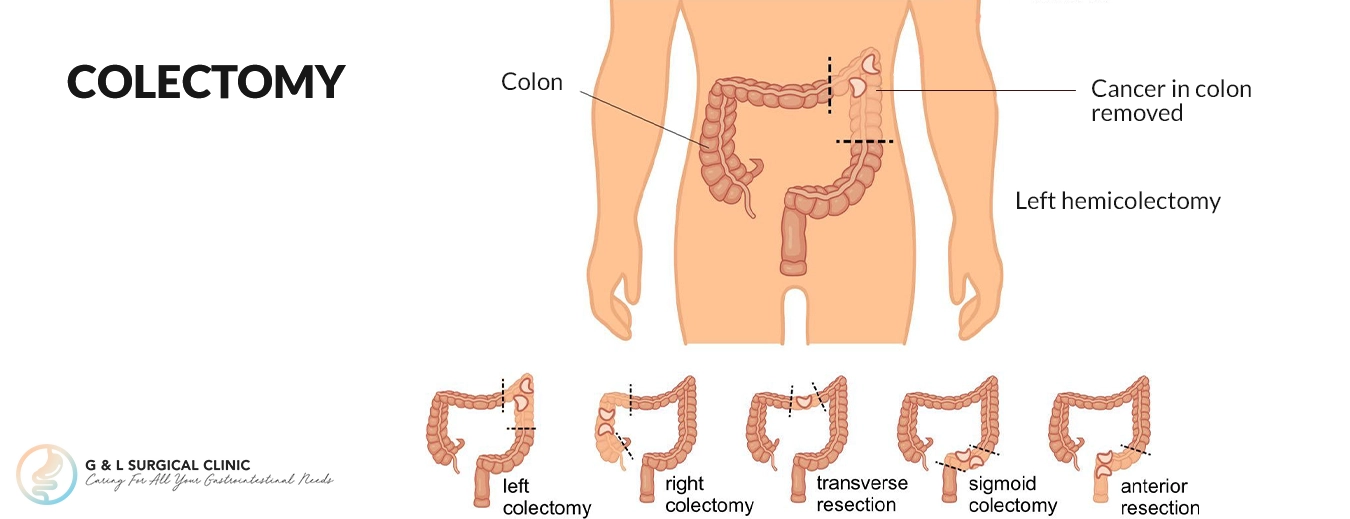
Surgery for colorectal is the main mode of treatment for colorectal of all stages. Surgery works by removing the part of your colon or rectum which contains the cancer and the regional lymph nodes. In rare cases, your entire colon may have to be removed.
The two ends of the sections being cut are then connected. Should there be a case where your colon is not able to be connected, an artificial opening for the colon, which is known as a colostomy, may be needed. This opening works by allowing waste materials to be excreted from your body if it is not able to be removed from the normal opening of your colon. The colostomy may be temporary, and the ends of your colon may be reconnected when your colon has healed. In other cases, the colostomy is permanent.
In more advanced stages of colorectal cancer, surgery will be performed on other organs to which the cancer has spread to remove the cancer. Surgery may also be performed as a form of palliative treatment to ease the pain, discomfort and other symptoms you may experience. Palliative surgery aims to improve your quality of life.
After surgery has been carried out to remove as much of the cancer as possible, chemotherapy and/or radiotherapy may be required to kill any cancer cells that are still in your body. These increase the chances that you are fully cured from colorectal cancer and lowers the possibility of the cancer returning.
Chemotherapy refers to the injection of anti-cancer medications into a vein on your hand. Radiotherapy refers to the use of high energy X-rays, electron beams or radioactive isotopes to attack your cancer cells. A machine is used to deliver this radiation to targeted cancer cells in your body to stop the growth of cancer cells.